The Origin And Composition Of Car Wheels
Sep 05, 2025
The hub is also known as the wheel rim or tire bell. It is a cylindrical metal component that supports the tire inside the tire and is centered on the axle. It has different designs, materials, and sizes. So, how did the hub come into being? In fact, the prototype of the hub appeared a long time ago.
Its evolution history is roughly as follows: stone → wooden stake → wheel of a carriage → hub of a bicycle → hub of a car.
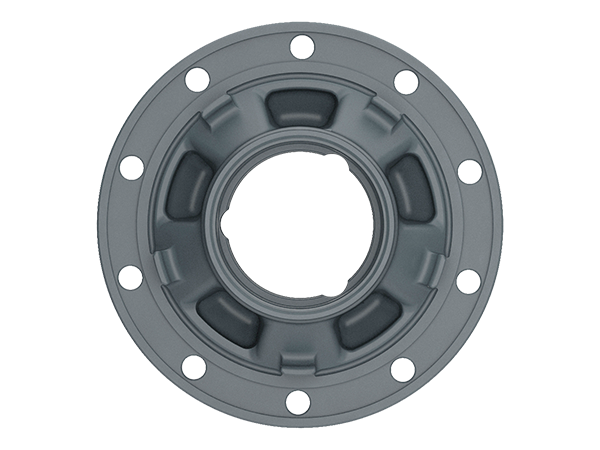
During the period from the late 19th century to the early 20th century, the rims, hubs, and spokes began to be integrated through casting techniques, and the hub styles started to change. Then came the steel hubs that we use today. The characteristic of steel hubs is that they look very heavy and plain, with a single color scheme. As the automotive industry developed, they seemed out of place with the exterior design.
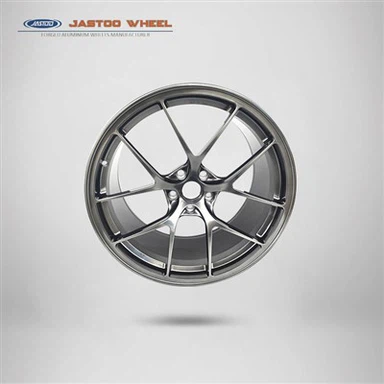
In the 1930s, the technological breakthroughs made by the Germans laid the foundation for the development of aluminum alloy hubs; in 1958, the integral cast aluminum alloy hubs appeared, and now most models on the market are equipped with aluminum alloy hubs. The characteristic of aluminum alloy hubs is that they have diverse shapes, are lightweight, and represent a qualitative leap compared to steel hubs.
The shapes of wheel hubs in the market are numerous. However, regarding the composition of wheel hubs, currently the majority of models on the market use steel hubs and aluminum alloy hubs, which are composed of various metal materials. Wheel hubs, apart from different design styles and types, have many similar components, mainly consisting of the rim and the spokes. Additionally, all wheel hubs contain many parameters, such as edge groove level, weighing level, pitch, offset, width, etc.

At present, the most commonly used type of wheel hub is the aluminum alloy wheel hub. In terms of the manufacturing process and technology of wheel hubs, it has developed rapidly. Currently, the technology of aluminum alloy wheel hubs can be divided into: casting (gravity casting, low-pressure casting) and forging. The casting wheel hubs can have various shapes and have a lower manufacturing cost. However, after being impacted, due to their relatively low strength, they are prone to bending and are not easy to break. Forged wheel hubs are superior to cast wheel hubs because they have higher rigidity and are lighter, which is more helpful for acceleration, deceleration, cornering, fuel consumption, and suspension load.