Where Is The Four-wheel Alignment Positioned?
May 22, 2025
After driving for many years, many people may have encountered situations such as hitting the curb, replacing old suspension arms, tire wear, and the vehicle veering off course. At such times, a four-wheel alignment is needed. So, what exactly does a four-wheel alignment determine? This has to start with the vehicle itself. Let's first take a look at the shock absorber tower tops of a few body-in-white vehicles.


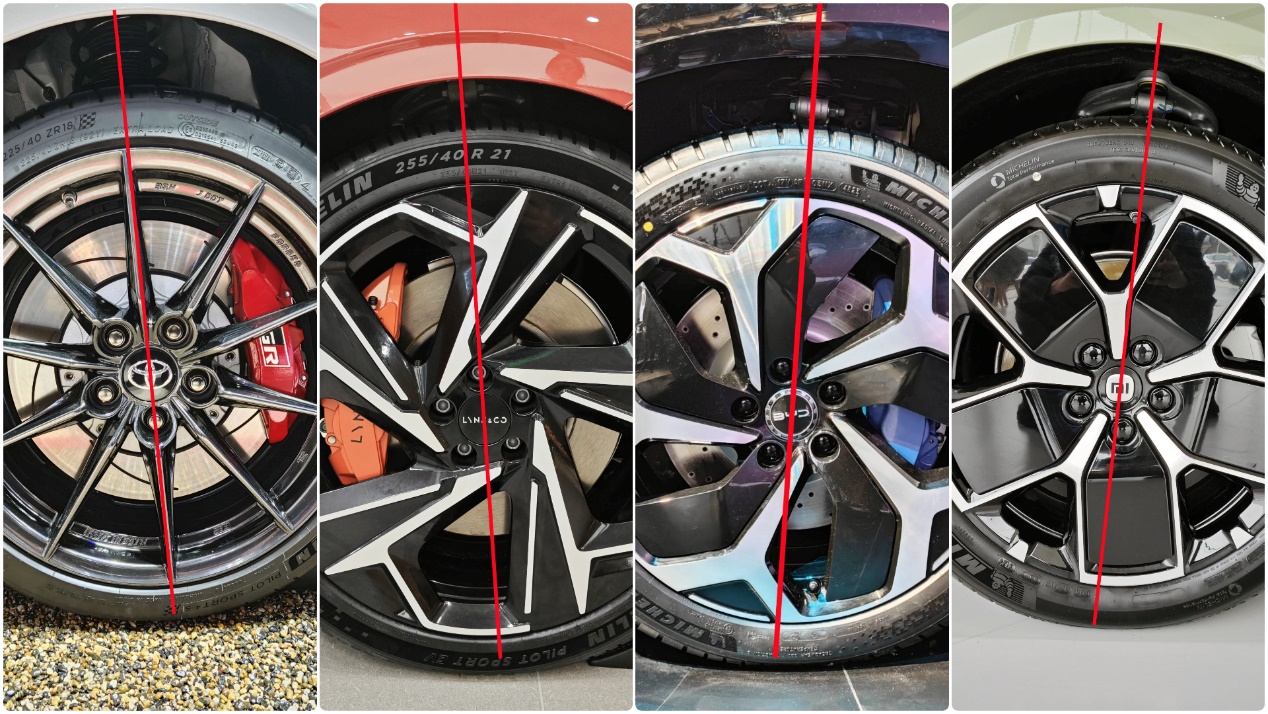
The two pictures above show the top position of the shock absorber tower of the vehicle suspension. It can be clearly seen that the top of the tower shows a relatively obvious inclination Angle, which means that the wheel suspension is not perpendicular to the ground.
Why does the suspension have a certain Angle?
Because the existence of angles can bring many features to a car, such as more stable driving and the ability to automatically straighten the steering wheel after turning, these are all the benefits brought by the suspension Angle.
Generally speaking, the adjustable parts of a vehicle's suspension include: camber (camber Angle); caster (main pin inclination Angle); and toe (Anterior beam Angle).
Camber camber Angle
The camphor Angle refers to the Angle between the centerline of the wheel and the vertical line. When looking at the tire from the front or rear of the vehicle, if the tire forms an outward "eight" shape, it is called negative camber, while an inward "eight" shape is positive camber.
When the inclination Angle is negative, the pressure on the inner side of the tire in contact with the ground is greater, while the pressure on the outer side is smaller. Correspondingly, the inner side of the tire is more prone to wear. When the inclination Angle is positive, the opposite is true.
To ensure even tire wear, most family cars adopt an inclination Angle close to 0. However, considering the vehicle's cornering performance, most family cars will adopt an appropriate negative camber Angle to enhance the vehicle's cornering performance.
When a vehicle is cornering, the body tilts to a certain extent due to the shift of the center of gravity. If the roll Angle is 0, in a curve, due to the roll, the contact area of the tires will decrease, and in extreme cases, the vehicle is more likely to lose control. To enhance tire grip and assist vehicles in cornering, many car manufacturers tend to set the camber Angle to a negative value. F1 formula racing cars have a distinct "outer eight", that is, a negative camber setting.
However, everything has a limit. If the negative camber angle is too large, the tire contact area will decrease when the vehicle is traveling in a straight line. This will lead to reduced vehicle stability during straight driving, lower braking adhesion, decreased overall safety performance, and increased tire wear.
The inclination Angle of the Caster's main pin
The tilt Angle of the main pin generally refers to the backward tilt Angle of the main pin. It refers to the Angle formed by the shock absorber line and the X-axis when the vehicle body is viewed from the side. When the backward tilt Angle is positive, the suspension tilts backward; when the backward tilt Angle is negative, the suspension tilts forward.
When the rear tilt Angle of the main pin is positive, the steering wheel will actively return to the center when the vehicle is in motion. Since the intersection point of the main pin and the ground is located in front of the wheel connection position, the wheel will be pulled forward by the main pin, and the tire will automatically rotate back in the forward direction. The greater the tilt Angle of the main pin, the greater the force required to straighten the steering wheel.
Most civilian vehicles adopt a certain rear tilt Angle of the main pin to enhance driving stability. Meanwhile, this active steering wheel alignment effect can further increase the road feel. If the rear tilt Angle of the main pin is too large, a greater force needs to be applied when turning. If the rear tilt Angle of the main pin is too small, although the steering becomes more flexible, the steering feedback is also less, commonly known as having no road feel. The driver may not know the current direction of the wheels.
Toe front corner
The toe-in Angle refers to the Angle formed by the two wheels. When looking at the wheels from above the vehicle, the front end tilts inward (inward-shaped), which is called the toe-in. When the front end of the wheel tilts outward (outward eight), it is called the negative toe-out.
The function of the harness Angle is to compensate for the tendency of the tire to roll inward or outward due to the camber Angle and road resistance, ensuring the vehicle's straightness. Civilian vehicles generally also adopt a 0-degree, slightly positive beam Angle setting. A positive beam Angle makes the straight line more stable, but the steering bias is insufficient. A negative beam Angle makes the turning more flexible, but the steering bias is excessive.
In other words, if you want the steering of the wheels not to be too flexible and lean towards the headgear, toe-in is generally used on the front wheels to enhance stability during acceleration. If you want to get more turns when entering a corner, use toe out.
The larger the toe-in or toe-out Angle is, the less the vehicle's acceleration ability in a straight line will be reduced, but the ability in other aspects will be enhanced. Byd's Yisanfang platform adopts a dual-steering motor on the rear axle. One of its functions, the inner eight brake stabilization, utilizes the toe-in feature.
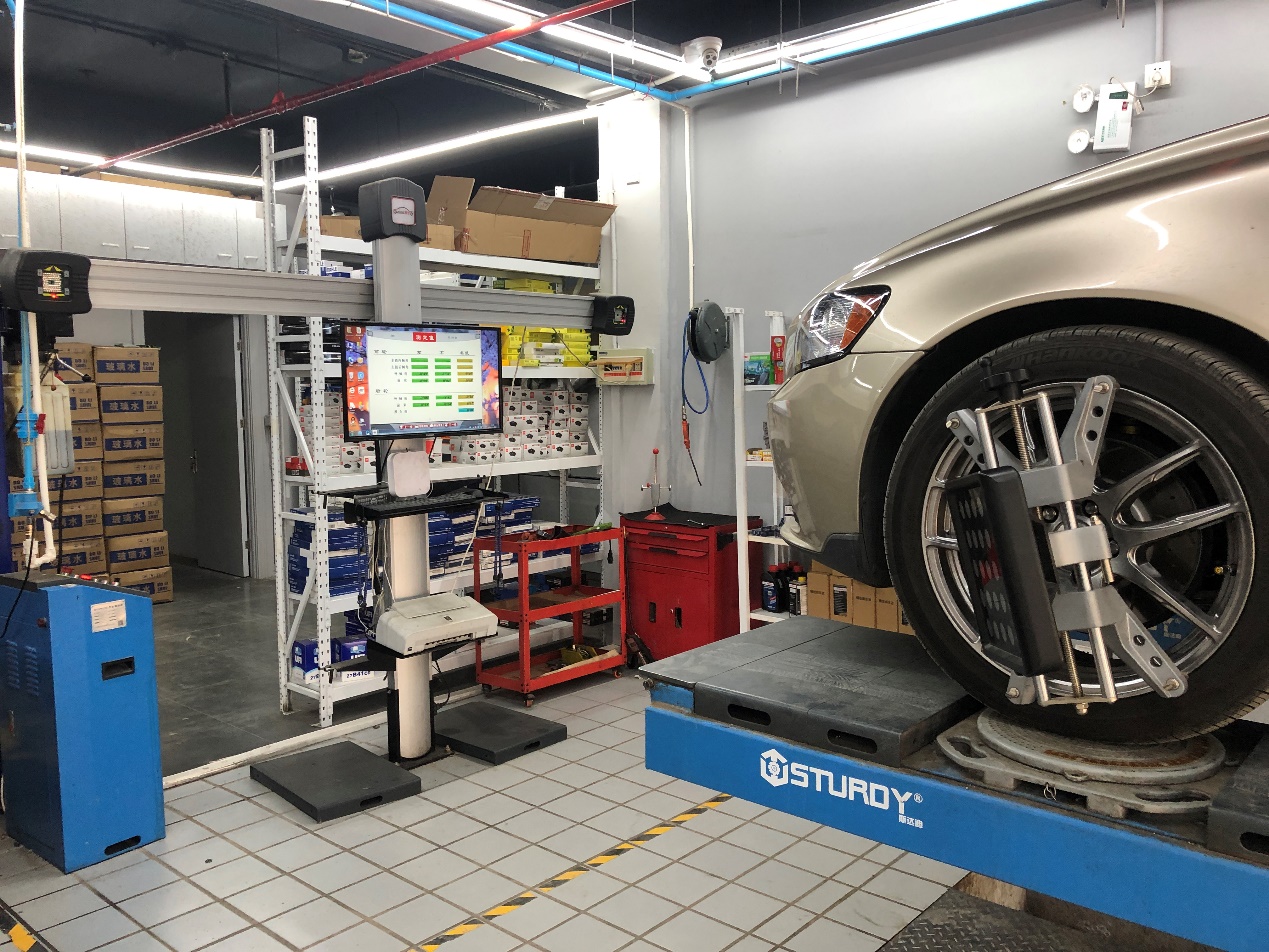
The above are the areas that need to be adjusted for the four-wheel alignment. Generally speaking, four-wheel alignment does not require regular adjustment. It is only necessary when the vehicle veers off course, the tires wear out evenly, or when parts such as the control arm, rubber sleeves, and shock absorbers have been replaced.