

How to better maintain the brake drums during normal driving?
Sep 26, 2025
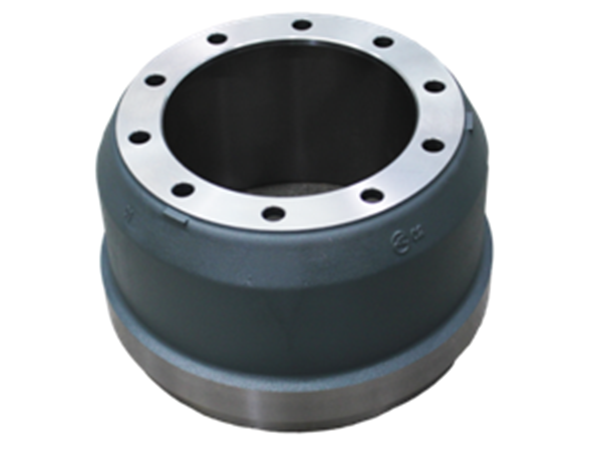
The automotive brake hub is a component of the automotive drum braking system, also known as the brake drum. The main material used for its manufacture is usually gray cast iron. Cast iron is relatively wear-resistant, but it becomes brittle after aging and is prone to cracking under overload conditions. Therefore, during use, it is necessary to pay attention to inspection and maintenance. So, what inspection items should be paid attention to when driving normally?
1. Strengthen the inspection before and during the journey, especially the technical conditions of the braking, steering, transmission, and wheels must be intact to ensure reliable operation.
2. Before going down a slope, especially on some long and steep hills, carefully check the braking system, whether the air pressure is intact and sufficient, whether there is any leakage in the braking pipelines (for air braking), leakage of oil (for hydraulic braking), and whether there are any signs of looseness at the connection parts. If any problem is encountered, it should be solved promptly without any mentality.
3. Use correct braking methods. Utilize the traction effect of the engine and the foot brake to control the speed of the vehicle. Do not step on the clutch pedal or shift into neutral to coast, and avoid emergency braking. Do not blindly shift into neutral and coast down the slope to save fuel. This is extremely dangerous. When going down a slope, the car's center of gravity will move forward, and the inertia force and downhill driving force will naturally increase. In such cases, the driver must use the brakes to reduce the vehicle's speed to ensure driving safety.
4. Scientific driving. When encountering a long downhill slope with many sharp bends, you can drive in sections. After running a certain distance, find a place with a slightly gentler slope and good visibility to stop. At the same time, let the air reservoir be fully inflated, and let the brake drum and brake shoes cool down. Then continue driving.
5. Cooling the brake drum. During driving, as the temperature of the brake drum rises, the braking efficiency will significantly decrease. Therefore, the car is equipped with a water reservoir. Before going down the slope, turn on the water reservoir switch to allow water to flow onto the outer surface of the brake drum for cooling, which can effectively improve the braking efficiency.
6. Select high-quality brake fluid. Most hydraulic braking vehicles use alcohol-based brake fluid, which contains alcohol that is prone to volatilization. Frequent braking can easily cause the temperature of the braking pipelines to rise and form air blockage, resulting in brake failure. If high-quality brake fluid is selected, it can significantly improve the driving safety coefficient.

It is very important to check the brake drum during its use, but there are also strict requirements during the design process. If the brake drum is improperly designed, it will deform when heated; if the force on the brake drum is unbalanced, it will also undergo mechanical deformation, causing the pawl to not contact the drum properly, increasing pedal force and stroke; when the roundness of the working surface of the brake drum is too large, it will cause self-locking and generate vibration and noise. Therefore, the brake drum should have sufficient wall thickness, and circumferential or axial reinforcing ribs should be cast on the outer surface near the opening to improve its strength.


