

Worried about getting ripped off when buying magnesium alloy wheels? Remember these tips to help you distinguish between genuine and fake magnesium alloy wheels.
Nov 18, 2025
What are magnesium alloy wheels?
Magnesium alloy wheels, commonly known as "magnesium rims," are primarily composed of magnesium (Mg), mixed with other metallic elements such as aluminum, zinc, and manganese to enhance performance. They are fundamentally different from the aluminum alloy wheels we commonly see.

Advantages of magnesium alloy wheels
Ultimate Lightweight Design
This is the greatest appeal of magnesium alloy wheels. Magnesium has a density of approximately 1.74 g/cm³, while aluminum has a density of approximately 2.7 g/cm³. This means that, for the same volume, magnesium alloy is about 35% lighter than aluminum alloy.
Benefits:
☑ Improved Handling: Reduced unsprung mass (weight below the suspension system) allows the suspension to respond more quickly to road changes, improving tire grip, cornering stability, and steering responsiveness.
☑ Superior Acceleration and Braking: Lower rotational inertia results in smoother acceleration and less braking load, shortening braking distance.
☑ Fuel/Electricity Savings: Lightweight design leads to overall energy savings.

Superior Damping Performance
Magnesium alloys possess a very high damping capacity, meaning their ability to absorb vibration energy far surpasses that of aluminum alloys and steel. This translates to their ability to more effectively absorb impacts and vibrations from the road surface, improving ride smoothness and comfort.
High Specific Strength
While the absolute strength of magnesium alloys may not necessarily exceed that of top-tier aluminum alloys, their "specific strength" (strength to density) is exceptionally high, allowing them to maintain sufficient structural strength while achieving lightweight construction.
Excellent Heat Dissipation
Magnesium alloys exhibit good thermal conductivity, helping to dissipate heat generated during braking more quickly from the braking system, reducing brake fade, which is particularly important for high-performance driving and track days.

Manufacturing process
Casting
▶Low-pressure casting: The most common method, with relatively controllable costs, produces high-performance wheels.
▶Gravity casting: A more traditional method.
Cast wheels are characterized by lower costs, but the material may contain tiny pores, resulting in lower strength and weight compared to forging.
Forging
This is the method for producing top-tier magnesium alloy wheels. The blank is extruded under immense pressure in a solid state, resulting in a denser metal grain structure and fiber flow aligned with the direction of stress.
★Advantages: Extremely high strength, lighter weight, and better toughness.
★Disadvantages: Extremely expensive, typically only used in top-tier racing cars or supercars.
How to identify and select products?
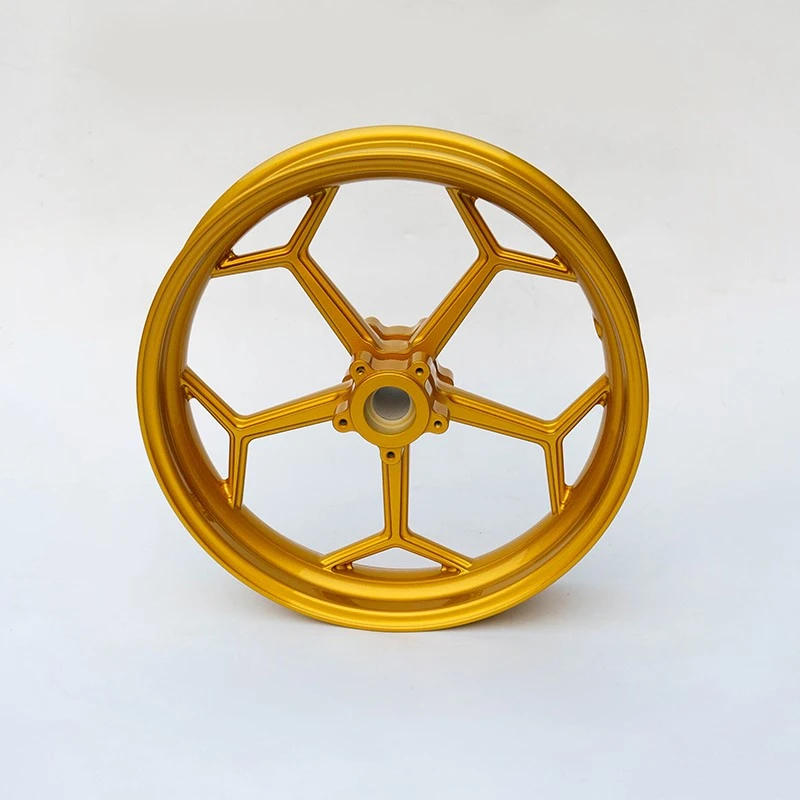
1. Weight Check:
This is the most intuitive method. For the same size, magnesium alloy wheels are significantly lighter than aluminum alloy wheels, resulting in a noticeable difference in feel.
2. Price Check:
If the price is similar to or even lower than high-end aluminum alloy wheels, it's almost certainly a fake. Genuine magnesium alloy wheels are very expensive.
3. Surface Texture:
Due to the need for multiple layers of rigorous coating protection, genuine magnesium alloy wheels typically have a very thick, smooth, and textured paint finish. Inferior counterfeit wheels may have a thin and rough paint finish.
You Might Also Like
-

12 Inch Black Motorcycle Wheel Rim Blank
-

Forged Alloy Wheels 6061 T6 Rims Forged Aluminum 20×8.5 Inch
-

22×10 Inch Shiny Black Painting Car Wheels For Audi Car
-

16x5.5 Forged Water Chrome Truck Wheel Rims
-

20 Inch Gloss Black Forged Alloy Wheels For BMW
-

24 Inch PCD 5-120 mm Gloss Black Painting Car Forged Allo...